Diffusion Tower Stability: What Beet Quality Does to Extraction, Juice Flow, and Downstream Load
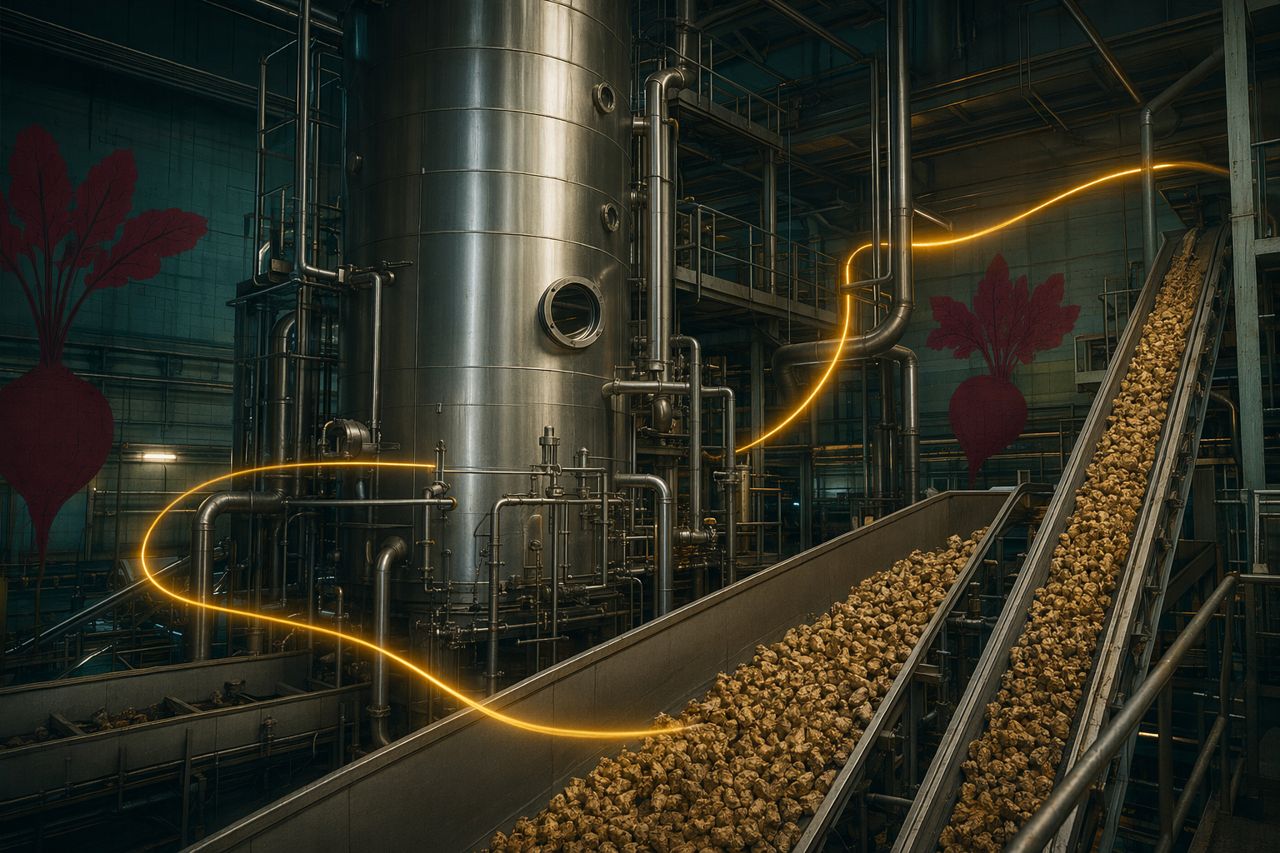
A diffusion tower looks steady from the control room until beet quality changes the rules. Frozen roots, stored beets, deteriorated piles, soil load, damaged tissue, and microbial activity can all shift the way cossettes release sucrose and non-sugars into raw juice.
For a sugar beet factory, those changes are not only agricultural. They become hydraulic, thermal, and filtration problems: thicker juice, uneven tower draw, higher clarification burden, slower mud handling, more foam tendency, and less predictable evaporator behavior.
Enzymeschoice supports factories that need enzyme programs matched to real campaign variability. As an enzyme supplier for sugar beet processing, our focus is practical: help process teams manage pectin and dextran challenges with predictable dosing, cleaner flow behavior, and steadier downstream operation.
Why beet quality shows up first in diffusion
Diffusion is where beet structure, slicing quality, temperature control, and residence time meet. When cossettes are firm and uniform, extraction can remain stable across the tower. When beet quality declines, the tower often becomes the first place instability is visible.
Common field-to-factory causes include:
- frost-damaged beet tissue that releases more soluble non-sugars
- long storage periods that increase biological degradation risk
- poor pile ventilation, hotspots, and local deterioration
- weak or ragged cossettes from soft beets or slicing stress
- higher soil and debris load affecting washing and thermal balance
- microbial pressure that can contribute to dextran formation
The result is not one single fault. It is a pattern: higher viscosity, slower movement, more difficult clarification, and less forgiving filtration.
Pectin, dextran, and the hidden load on juice flow
Two problem families matter strongly in beet campaigns: pectin-related viscosity and dextran-related processing stress.
Pectin-related viscosity
Pectin and cell-wall materials are released more readily when beet tissue is stressed, aged, frozen, thawed, or mechanically damaged. In the factory, that can translate into:
- heavier raw juice handling
- less responsive heat transfer
- higher apparent viscosity in intermediate streams
- slower clarification response
- increased pressure across filtration stages
- more variable syrup behavior later in the line
Dextran-related behavior
Dextran is typically associated with microbial activity and degraded beet condition. In practical terms, it can create stringy, elastic, difficult-to-filter juice behavior. It can also make process symptoms feel disconnected: the diffusion tower may look only slightly unstable while filtration and crystallization carry the penalty.
For process managers, the challenge is timing. By the time high-viscosity behavior becomes obvious downstream, the factory may already be feeding difficult juice through several process stages.
What instability looks like on the refinery floor
Tower instability is rarely announced by one number. Operators usually see a cluster of signals.
In diffusion
- uneven cossette movement
- unstable tower level behavior
- draw fluctuations
- increased recirculation adjustments
- variable extraction response despite similar setpoints
- higher sensitivity to temperature changes
In raw juice and clarification
- heavier juice feel at transfer points
- slower settling or less compact mud behavior
- increased chemical correction pressure
- more frequent attention to foam and suspended solids
- less consistent clarified juice appearance
In filtration and evaporation
- shorter filter cycles
- pressure rise at a faster rate
- more frequent cleaning interventions
- thicker intermediate streams
- variable evaporator loading
- less predictable syrup movement
The commercial impact is straightforward: when difficult beet quality is not managed early, the factory pays later through lost steadiness, reduced operating flexibility, and more manual intervention.
Where enzyme programs fit
Enzyme treatment is not a substitute for beet handling, slicing discipline, temperature control, or good factory practice. It is a process aid that can help reduce the burden created by specific non-sugar structures.
A well-selected enzyme program for sugar beet processing may support:
- pectin breakdown to improve flow behavior
- dextran management when microbial deterioration is present
- more predictable viscosity control in problem campaigns
- improved filtration behavior through reduced polymeric load
- steadier clarification response when beet quality varies
- smoother transitions between beet piles with different condition profiles
The most useful programs are not generic. They are matched to campaign risk, process location, contact conditions, factory constraints, and the point where the operator needs the greatest stability gain.
Practical dosing: predictable, controlled, and campaign-aware
For industrial beet factories, enzyme dosing has to be operationally simple. Process teams need a program that can be adjusted without creating new uncertainty.
Enzymeschoice typically discusses dosing around:
- beet condition and pile history
- diffusion temperature profile
- expected residence time and contact opportunity
- juice viscosity symptoms
- filtration pressure trends
- clarification and mud behavior
- campaign stage and daily throughput targets
The aim is controlled intervention, not over-treatment. A predictable program should be easy to start, monitor, and adjust as beet quality changes through the campaign.
Why early response matters
When difficult beet is entering the factory, early stabilization can protect downstream capacity. A small change in viscosity at the front of the process can affect several later operations: clarification, filtration, evaporation, and crystallization.
That is why diffusion tower stability should be viewed as a whole-line issue. The tower is the first major extraction vessel, but the load it releases moves through the entire sugar house.
A practical response plan includes:
- Identify beet lots with higher deterioration, frost, or storage risk.
- Watch for early viscosity and draw behavior changes.
- Confirm whether pectin, dextran, or mixed polymeric load is likely.
- Select an enzyme approach matched to the symptom and process window.
- Track filtration, clarification, and flow response over operating shifts.
- Adjust dosing calmly as beet quality changes.
Questions process managers should ask before the campaign peak
Before difficult beet arrives in volume, the production team should align on a few practical questions:
- Which beet piles are most likely to create viscosity or dextran issues?
- Where does the factory first see the penalty: tower, clarification, filters, or evaporators?
- Is the current response reactive, or can the process be stabilized earlier?
- Can dosing be integrated into normal operations without extra complexity?
- What trend data will operators use to confirm improvement?
- Who has authority to adjust treatment during a changing shift?
Clear answers make the enzyme program easier to run when the campaign becomes less predictable.
How Enzymeschoice supports sugar beet factories
Enzymeschoice works with factory teams that need enzyme solutions grounded in beet campaign reality. We focus on process-fit recommendations for pectin and dextran challenges, with attention to throughput, juice movement, clarification load, filtration behavior, and operating stability.
Our technical conversations are built for production managers, process engineers, and procurement teams who need dependable supply and practical guidance without exaggerated promises.
If beet quality is starting to affect extraction, juice flow, or downstream load, we can help define a treatment approach for your factory conditions.
Request a quote
Share your campaign conditions, expected beet quality risks, and process pain points. Enzymeschoice will respond with a practical enzyme recommendation and quotation.