Raw Juice Viscosity Troubleshooting Map for Beet Sugar Factories
When raw juice begins to move like a heavier product than the factory expects, the whole beet end feels it. Diffusion draw tightens. Screens blind sooner. Liming and carbonation become less forgiving. Filters lose clean cycle length. Evaporators see less stable feed behavior.
For a sugar beet factory, viscosity is rarely a single-cause problem. It is usually a map of beet condition, extraction temperature profile, pectin release, microbial dextran formation, suspended solids, and juice residence time. The task is not to blame one station. The task is to read the signals early enough to keep throughput predictable.
Enzymeschoice supports factories as an enzyme supplier for sugar beet processing with targeted process aids designed for pectin and dextran challenges in beet juice streams. This guide is written for process managers who need a practical troubleshooting route from first symptom to controlled corrective action.
The operating symptoms that usually appear first
Raw juice viscosity rarely announces itself with one clean alarm. It shows up as a pattern across the beet end and juice house.
Common early signals include:
- Higher diffusion circulation load at the same slice rate
- Slower juice separation from cossettes
- Increased drag across screens and strainers
- Raw juice that holds foam or fine solids longer than normal
- Clarification floc that forms inconsistently or settles slowly
- Carbonation liquor that filters with shorter cycles
- More frequent filter cloth washing or pressure rise
- Evaporator feed that responds sluggishly to normal control moves
- Laboratory viscosity trend moving upward alongside turbidity or suspended solids
The important point: viscosity is not only a liquid property. In a beet factory, it changes how solids, colloids, gas, lime, floc, and heat transfer behave together.
A faceless one-minute explainer
[Embed video: Raw juice viscosity troubleshooting map for beet sugar factories]
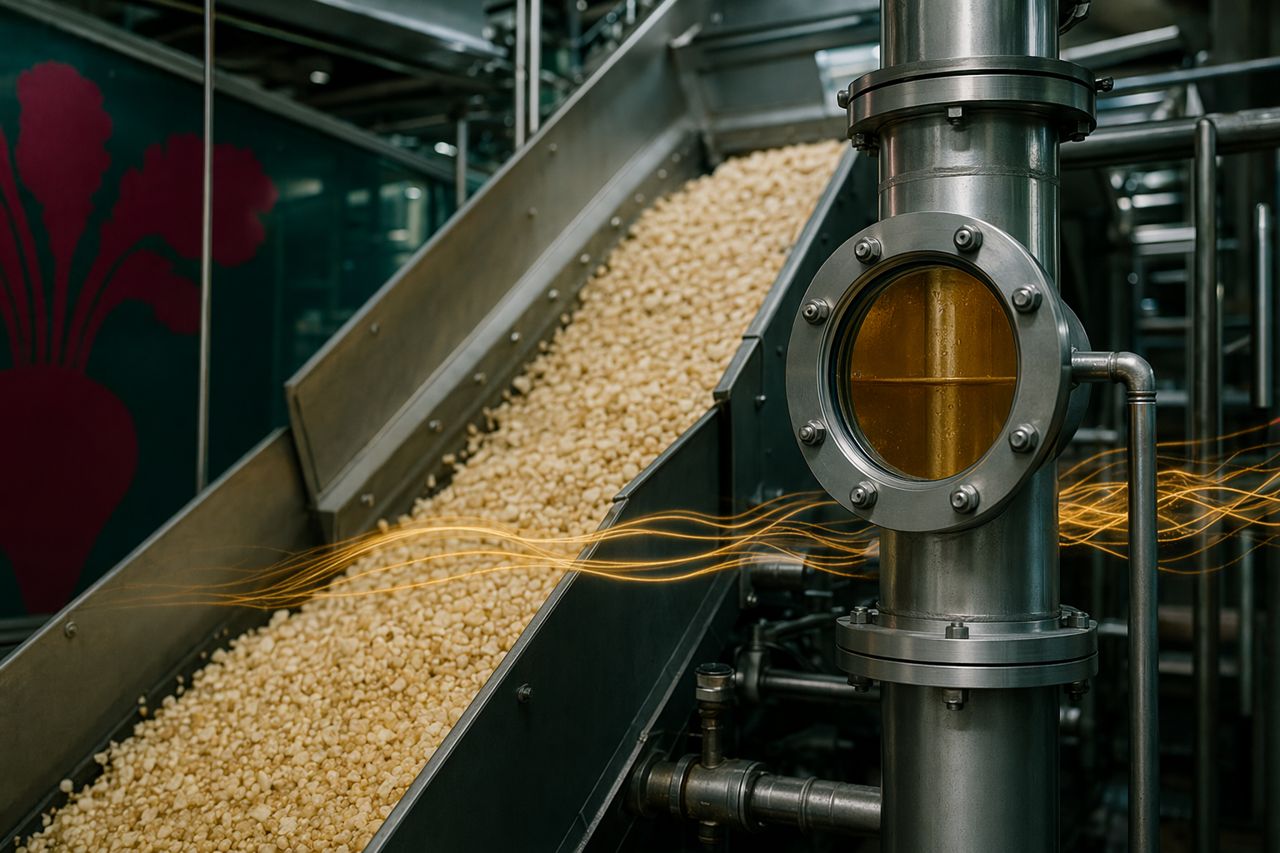
This short process visual follows beet cossettes through diffusion, raw juice clarification, filtration, and syrup concentration, showing where pectin and dextran can thicken flow and where enzyme-assisted control can stabilize the line.
Troubleshooting map: follow the viscosity back upstream
1. Start with beet condition at the slicers
Viscosity pressure often starts before juice is juice. Frost-damaged, stored, deteriorated, or mechanically bruised beets can release more soluble polysaccharides into the diffusion system.
Check for:
- Increased beet damage or storage stress
- Frost-thaw history and softened tissue
- Heavy mud carryover and washing variation
- Slice quality changes that expose more damaged cell material
- Cossette fines increasing in the diffuser
If the beet condition has shifted, the process may need more than a mechanical correction. Pectin release can increase even when the diffusion station appears mechanically sound.
2. Read the diffuser as a viscosity amplifier
Diffusion is where pectin-related viscosity often becomes visible. The diffuser is designed for extraction, but it can also amplify upstream beet variability if cell-wall material is released faster than the system can handle.
Look for:
- Higher pump load or circulation resistance
- Reduced juice mobility through cossette beds
- More suspended fines leaving with raw juice
- Variable draft behavior at similar operating targets
- Screen blinding that clears temporarily, then returns
A process enzyme program may help when the viscosity driver is polysaccharide-related rather than purely mechanical. The dosing point should be selected to give controlled contact without interfering with normal beet-end operation.
3. Separate pectin load from dextran risk
Pectin and dextran both create flow problems, but they do not come from the same source.
Pectin-related viscosity is commonly tied to beet tissue condition, thermal extraction, cell-wall breakdown, and suspended colloidal material. It can make raw juice feel heavier, make clarification less crisp, and extend filtration drag.
Dextran-related viscosity is linked to microbial conversion of sucrose, often associated with deteriorated beet, delays, warm holding points, or hygiene weak spots. Dextran can create severe filtration and crystallization difficulties even when the raw juice color does not fully indicate the risk.
Practical comparison:
- If the problem follows damaged beet lots and diffuser behavior, investigate pectin load first.
- If the problem follows beet deterioration, storage delays, or microbial indicators, investigate dextran contribution.
- If filters and crystallization become difficult out of proportion to raw juice appearance, consider dextran as a hidden driver.
A balanced enzyme strategy may require pectinase-focused support, dextranase-focused support, or a staged program depending on the campaign pattern.
4. Watch clarification behavior, not only raw juice numbers
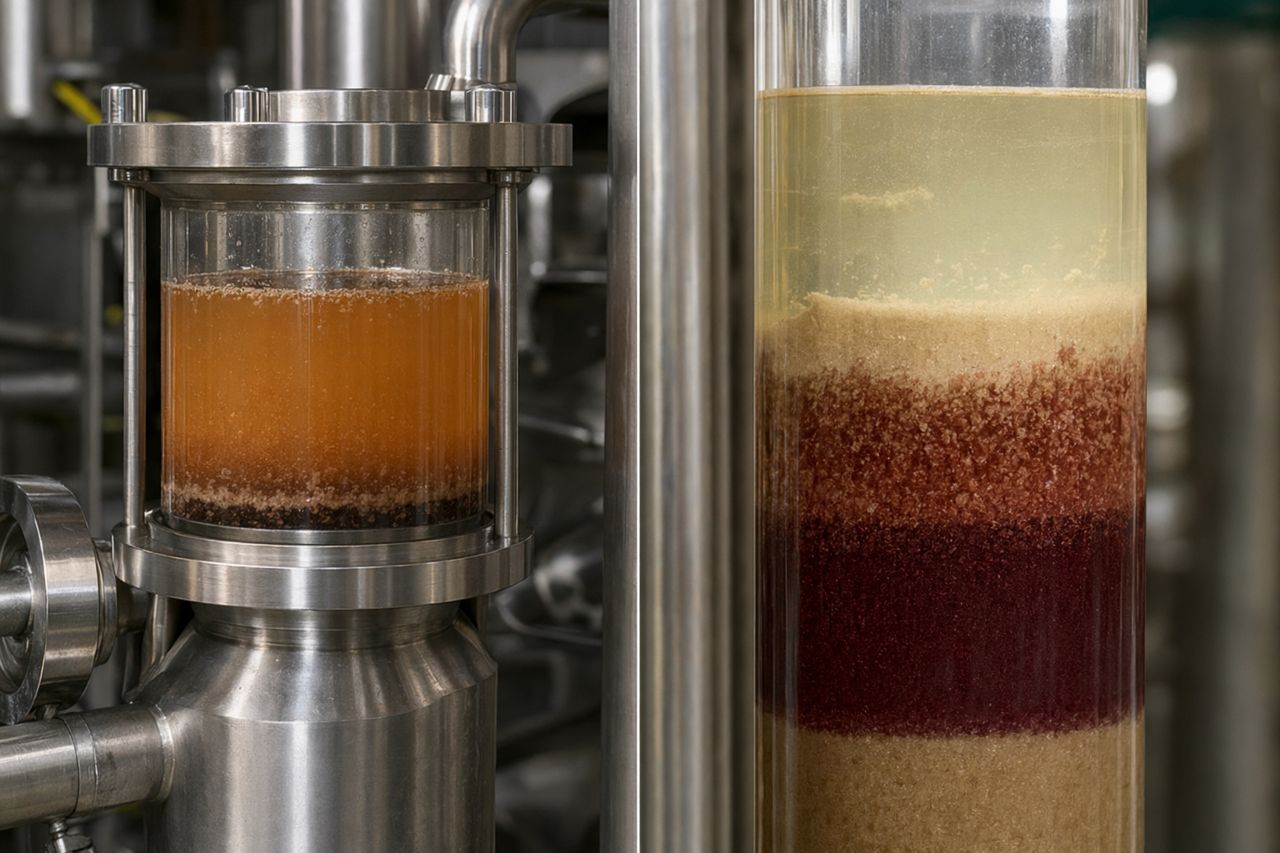
Raw juice viscosity becomes a clarification problem when colloids resist clean separation. The liming and carbonation system may still function, but the margin narrows.
Signs to document:
- Floc that forms but remains loose or slow settling
- Variable carbonation liquor clarity
- Higher suspended solids carryover after clarification
- Filter feed that changes character during the shift
- Operators compensating with chemical or operational adjustments more often than normal
Enzyme-assisted viscosity control is most useful when it supports the clarification window rather than chasing a single lab result. The goal is steadier floc handling, cleaner phase separation, and more predictable downstream filtration.
5. Use filtration as the operational truth test
Filters tell the truth about viscosity. Even a moderate viscosity increase can shorten cycles, raise pressure faster, and increase wash frequency.
Track the following by shift:
- Time from clean filter start to pressure rise
- Filtrate clarity trend
- Frequency of cloth wash or precoating adjustment
- Filter cake release behavior
- Carbonation liquor temperature and solids profile
- Any correlation with beet lots or diffuser changes
If filtration improves after viscosity reduction, the business value is direct: less interruption, more stable juice flow, and fewer reactive operator moves.
Where enzyme dosing fits in the map
Enzyme treatment should be treated like a process-control tool, not a mystery additive. The best programs are selected around the viscosity source, contact window, juice conditions, and operating objective.
Typical dosing design questions include:
- Is the primary target pectin, dextran, or a mixed load?
- Where is the earliest practical point with enough mixing and contact?
- Will the enzyme be applied to diffuser juice, raw juice, or another controlled stream?
- How will the factory verify improved flow behavior without disrupting production?
- Which operating indicators will define success: pressure trend, filter cycle, clarification stability, pump load, or evaporator feed consistency?
Enzymeschoice helps process teams build a dosing approach around actual factory constraints: available injection points, hygienic access, flow variation, temperature profile, retention opportunity, and shift-level measurement routines.
Practical decision tree for the shift team
If diffusion drag rises first
Prioritize:
- Beet condition and slice quality
- Cossette bed behavior
- Fine solids carryover
- Pectin load potential
- Early-contact enzyme option
Expected operating value from control: steadier extraction flow, less screen stress, and more predictable raw juice handling.
If clarification becomes unstable first
Prioritize:
- Raw juice suspended solids trend
- Floc formation and settling behavior
- Lime and carbonation response stability
- Pectin-colloid contribution
- Enzyme support before the clarification bottleneck, where practical
Expected operating value from control: cleaner separation behavior and fewer corrective moves in the juice house.
If filtration cycles shorten first
Prioritize:
- Pressure rise curve by filter
- Cloth condition and wash frequency
- Carbonation liquor solids and viscosity trend
- Dextran risk from beet deterioration or holding delays
- Targeted enzyme program matched to the suspected polysaccharide load
Expected operating value from control: longer stable filter cycles and more consistent filtrate flow.
If evaporator feed becomes sluggish
Prioritize:
- Upstream clarification consistency
- Residual fine solids and colloids
- Viscosity trend entering concentration
- Heat-transfer stability observations
- Earlier beet-end or juice-house correction rather than late-stage reaction
Expected operating value from control: smoother feed behavior and fewer viscosity-driven disturbances as concentration increases.
What to measure during a plant trial
A useful enzyme trial does not need to overload the factory with new paperwork. It needs a disciplined baseline and a clear comparison window.
Recommended operating indicators:
- Beet lot condition and storage notes
- Slice rate and diffuser loading context
- Raw juice viscosity trend
- Pump load or circulation resistance where available
- Screen and strainer cleaning frequency
- Clarification settling behavior
- Filter pressure rise and cycle length
- Filtrate clarity trend
- Evaporator feed stability observations
- Operator comments from each shift
The best trial result is not a dramatic story. It is a controlled pattern: the same factory, similar beet challenge, better flow behavior, and fewer instability events.
Buyer value: why process managers specify Enzymeschoice
Enzymeschoice is built for process managers who need reliable support during campaign pressure, not generic ingredient language.
What we bring to a beet sugar factory:
- Enzyme selection focused on pectin and dextran challenges in beet processing
- Application guidance around real injection points and contact windows
- Dosing logic designed for predictable operation and controlled adjustment
- Support for trial planning, baseline comparison, and shift-level observations
- Practical documentation for purchasing, technical review, and plant approval
- A calm technical partner when beet quality changes faster than the plan
Our work is not to promise a perfect campaign. It is to help the plant regain operating stability when viscosity is taking control away from the board.
Request a quote for a beet juice viscosity program
If your factory is seeing diffusion drag, raw juice thickening, unstable clarification, short filtration cycles, or suspected pectin and dextran load, Enzymeschoice can help map the issue and recommend an enzyme program for your process conditions.
Use the on-site request a quote form and include:
- Beet campaign stage and current bottleneck
- Where viscosity is first observed
- Current injection or dosing options
- Main operating symptoms
- Any recent beet storage, frost, or deterioration notes
Request a quote through the on-site contact form
We will respond with a practical process discussion and a quotation path suited to your factory conditions.