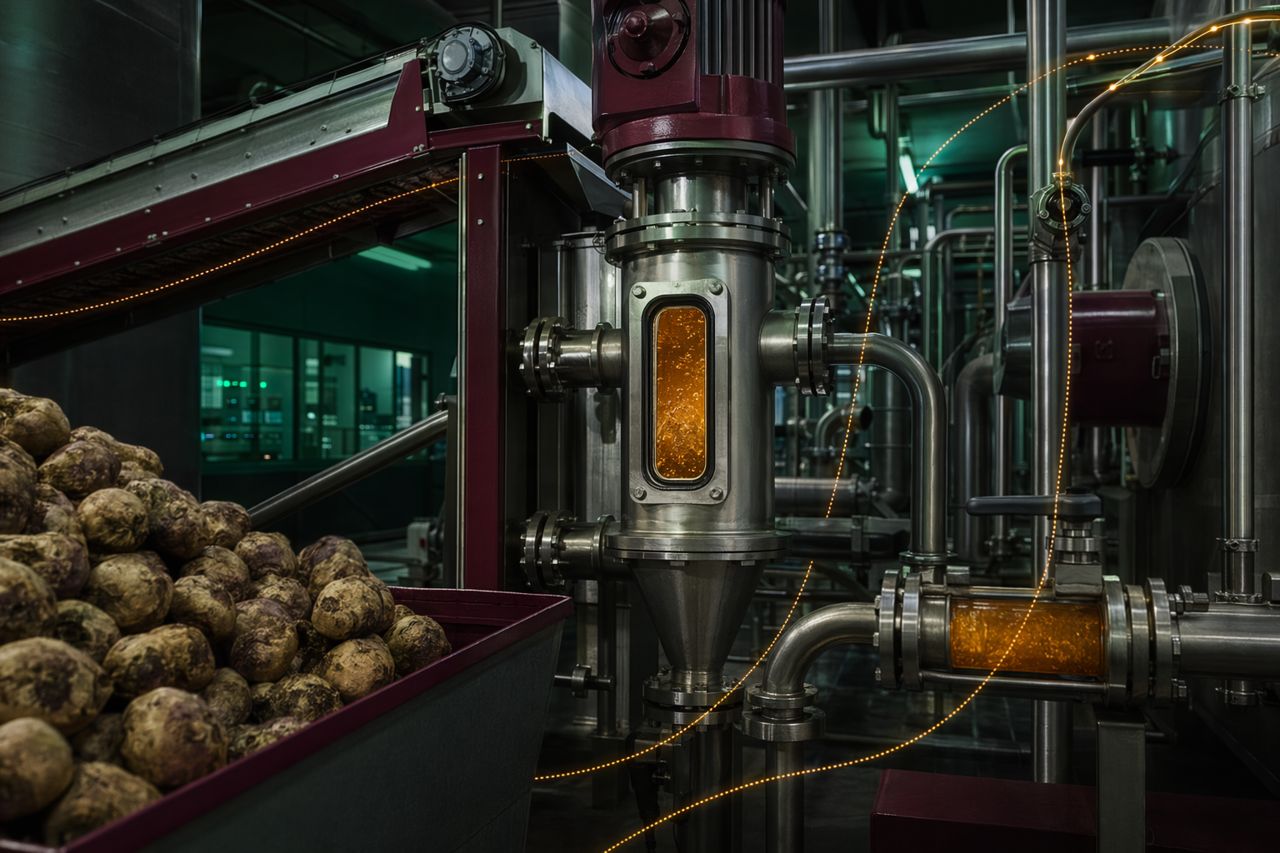
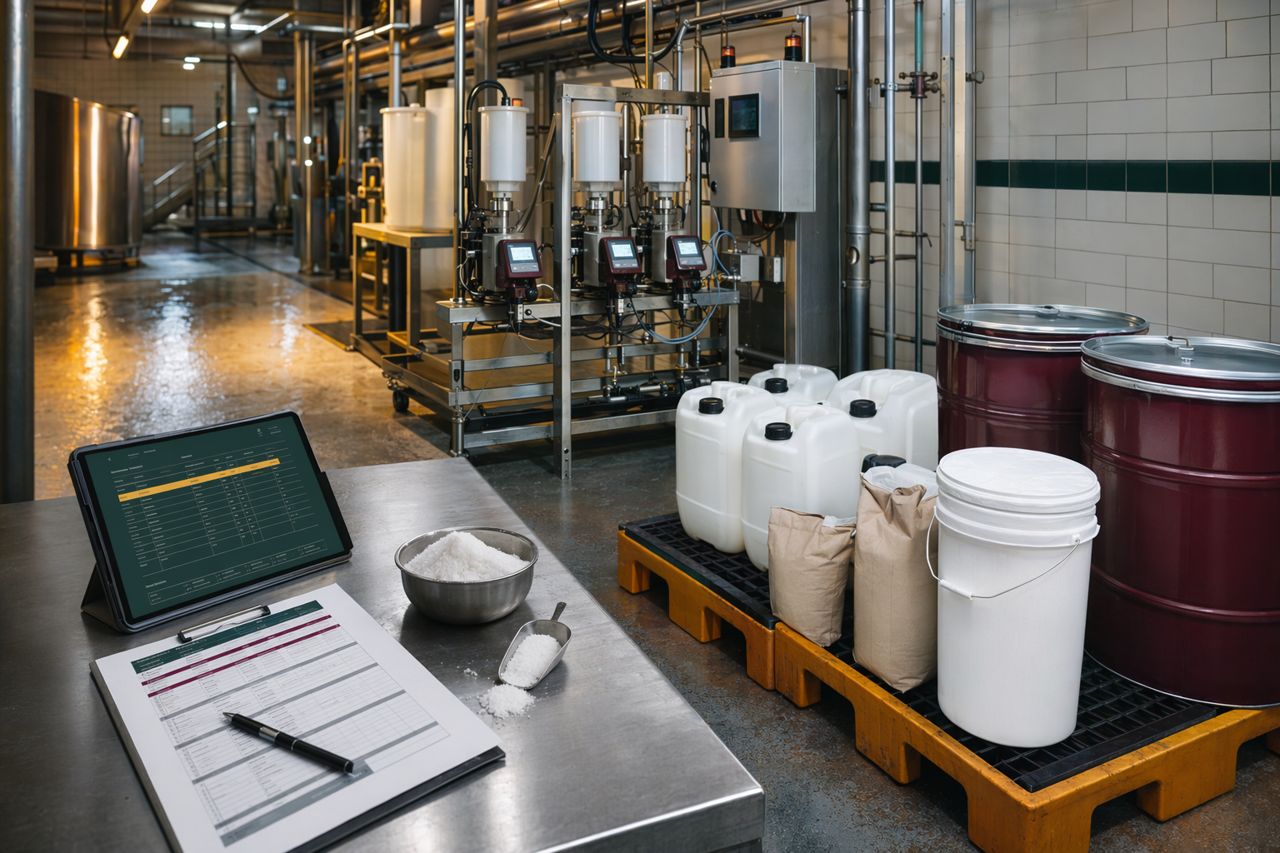
How Sugar Factories Should Plan Bulk Process Aid Procurement Before Campaign Peaks
Campaign pressure exposes weak procurement planning. When beet quality shifts, cossette behavior changes, raw juice becomes harder to clarify, and filtration margins narrow, the factory cannot wait for slow supplier responses or uncertain process aid availability.
For a sugar beet factory, bulk process aid procurement should be planned as part of campaign readiness, not treated as a late purchasing task. The right enzyme supplier for sugar beet processing should help operations, procurement, and technical teams align supply, dosing logic, storage, documentation, and escalation support before the factory reaches peak beet flow.
Enzymeschoice supports sugar beet factories with enzyme-based process aids selected for refinery-floor realities: diffusion performance, pectin-related viscosity, dextran challenges, juice clarification, filtration behavior, and stable downstream operation.
Why procurement timing matters before the peak
Peak campaign is not only a volume problem. It is a variability problem.
Factories may see:
- Beet deterioration after weather events or storage pressure
- Higher pectin contribution from damaged or stressed beet
- Dextran risk from microbial activity in compromised beet streams
- Variable cossette structure affecting extraction behavior
- Slower juice clarification and increased mud burden
- Rising viscosity through evaporation and filtration stages
- Shorter decision windows for process corrections
When process aids are purchased late, teams often compensate with urgent shipments, conservative operating choices, or trial-and-error adjustments during the most expensive production window. A better procurement plan creates supply confidence before those decisions become reactive.
Define the operating problem before defining the purchase volume
Bulk procurement should start with the factory’s process risk map, not with a copied prior-year order.
Procurement and process managers should review:
Beet intake and storage risk
Look at expected beet condition, storage duration, weather exposure, frost or thaw risk, and the likelihood of deteriorated beet entering the slicers during high-throughput periods.
Diffusion performance targets
Assess where extraction efficiency is most sensitive: cossette quality, juice circulation, thermal profile, or residence conditions. Process aids should fit the diffusion strategy rather than force operators into narrow handling windows.
Juice clarification behavior
If raw juice carries higher soluble impurities, colloidal load, or pectin-related thickening, clarification can become less predictable. Enzyme planning should consider how upstream viscosity and impurity behavior affect settling, mud handling, and downstream filtration.
Filtration and evaporation constraints
Even modest viscosity shifts can change filtration behavior and increase pressure on evaporation stability. A procurement plan should prioritize tools that help maintain flow behavior and reduce avoidable bottlenecks.
Historical upset patterns
Review prior campaign notes: when filtration slowed, when evaporators became harder to control, when clarification was unstable, and when emergency process aid orders were placed. These moments often reveal the real procurement requirement.
Build a bulk process aid plan around scenarios
A strong procurement plan covers more than average operation. It should define scenario-based readiness.
Base campaign coverage
This is the planned supply for expected beet quality and normal factory operation. It supports routine dosing and avoids frequent purchase interruptions.
Deteriorated beet contingency
Factories should reserve additional coverage for periods when beet quality declines. This is especially important when pectin release, dextran formation, or juice thickening becomes more likely.
Start-up and transition coverage
Start-up, stops, restarts, and beet source changes can create unstable juice behavior. A process aid plan should include enough flexibility to support these transitions without disrupting the main campaign inventory.
Emergency replenishment pathway
Before campaign peak, confirm how emergency replenishment will be handled: lead time, packaging format, documentation, dispatch contacts, and technical approval process. The emergency plan should be written before it is needed.
What to ask an enzyme supplier before committing to bulk supply
The supplier conversation should move beyond price per container. For sugar beet processing, procurement value is created by reliability, application fit, and operational support.
Ask the supplier to clarify:
- Which beet-related problems the enzyme solution is intended to address
- How the solution fits diffusion, juice clarification, filtration, or viscosity control goals
- How dosing recommendations are adapted to beet condition and process stage
- What storage and handling conditions are required on-site
- What packaging formats support safe, efficient plant use
- What documentation is available for purchasing, technical, and quality teams
- How lot consistency is managed for campaign-long supply
- How technical support is escalated during campaign peaks
- How replenishment lead time is protected when multiple factories are ordering simultaneously
A field-proven supplier should be able to discuss operating behavior in practical terms: juice flow, clarification response, filterability, viscosity trend, and plant stability. The discussion should not depend on lab language that does not translate to the control room.
Align dosing logic with plant reality
Predictable dosing is a procurement issue as much as a process issue. If a product requires unrealistic handling or narrow operating discipline, bulk purchase will not create stability.
For campaign planning, dosing logic should account for:
- Beet quality variation
- Diffusion loading and residence behavior
- Juice temperature windows already used by the factory
- Points of addition that fit existing pipework and access
- Operator visibility and adjustment routines
- Compatibility with existing process aid strategy
- Clear escalation steps when viscosity or filtration behavior changes
The goal is not to overcomplicate the plant. The goal is to make enzyme application understandable, repeatable, and easy to manage during high-throughput operation.
Plan inventory with procurement, operations, and technical teams together
Bulk process aid procurement works best when three groups are aligned.
Procurement
Procurement needs confirmed supply, clear packaging, predictable documentation, and agreed replenishment routes.
Operations
Operations needs products that can be received, stored, handled, and dosed without disrupting campaign flow.
Technical and process teams
Technical teams need confidence that the selected enzyme solution is matched to real beet factory constraints: pectin load, dextran risk, clarification response, filtration behavior, and viscosity control.
When these teams plan separately, the factory may buy a product that is available but not practical, technically relevant but poorly supplied, or easy to purchase but difficult to control in the plant.
Documentation to prepare before campaign
Before peak operation, confirm that the supplier can provide the documents your site requires. Typical requirements may include:
- Product specification and handling guidance
- Safety documentation
- Storage recommendations
- Packaging and labeling information
- Lot traceability information
- Quality and regulatory statements relevant to your site
- Delivery and receiving details
- Technical contact and escalation path
Having this ready before campaign reduces delays when additional supply or internal approval is needed.
Procurement signals that the plan is too late
A sugar factory is already behind if teams are asking these questions during peak:
- Can we get material next week?
- Which product should we use for this beet condition?
- Where should we dose it?
- Who approves the change?
- Do we have storage space?
- Why is filtration slowing again?
- Can the supplier support us today?
These questions should be answered during pre-campaign planning. During peak, the factory should be executing the plan, not building it.
How Enzymeschoice supports campaign procurement planning
Enzymeschoice works with sugar beet factories to connect enzyme supply with operating goals. Our focus is practical: help plants prepare for variable beet quality, support diffusion efficiency, improve viscosity control planning, and maintain more predictable clarification and filtration behavior.
We help teams review:
- Campaign risk points by process stage
- Pectin and dextran challenge scenarios
- Suitable enzyme process aid options
- Dosing and handling fit for the factory
- Bulk supply timing and replenishment planning
- Documentation needs before purchase approval
- Technical support expectations during campaign peaks
The result is a clearer procurement plan: the right process aid, in the right format, with the right technical context, before the factory is under pressure.
Request a quote for campaign supply planning
If your sugar beet factory is preparing for campaign peak, Enzymeschoice can help review your process aid requirements and quote bulk supply options matched to your operating window.
Request a quote for enzyme process aids for sugar beet processing.